
Campus Martius and the Ara Pacis
Most visitors see the Pantheon, the Ara Pacis and Augustus’ Mausoleum as separate monuments scattered across modern Rome.
In reality, they were once part of a vast ceremonial landscape carefully designed to communicate a political and religious message.
To understand Ancient Rome, it is essential to understand the Campus Martius, the enormous plain that stretched north of the Capitoline Hill and became the stage upon which Augustus transformed the Roman world.
Today, many of the most famous monuments in Rome still stand within this ancient district.
What Was the Campus Martius?
The Campus Martius, or Field of Mars, was originally a large floodplain located outside the ancient city walls.
Named after Mars, the Roman god of war, it served as a military training ground where Roman soldiers assembled before departing on campaigns.
Because it lay beyond the sacred boundary of Rome known as the Pomerium, military activities could take place there legally.
Over time, the area evolved into one of the most important political, religious and monumental districts of the Roman world.
Augustus and a New Rome
After decades of civil war, Augustus sought to reshape Rome both physically and symbolically.
The Campus Martius became one of the principal stages for this transformation.
Here Augustus built monuments designed to celebrate peace, imperial power, divine favour and the destiny of Rome.
The broader programme can be explored in Augustan Rome .
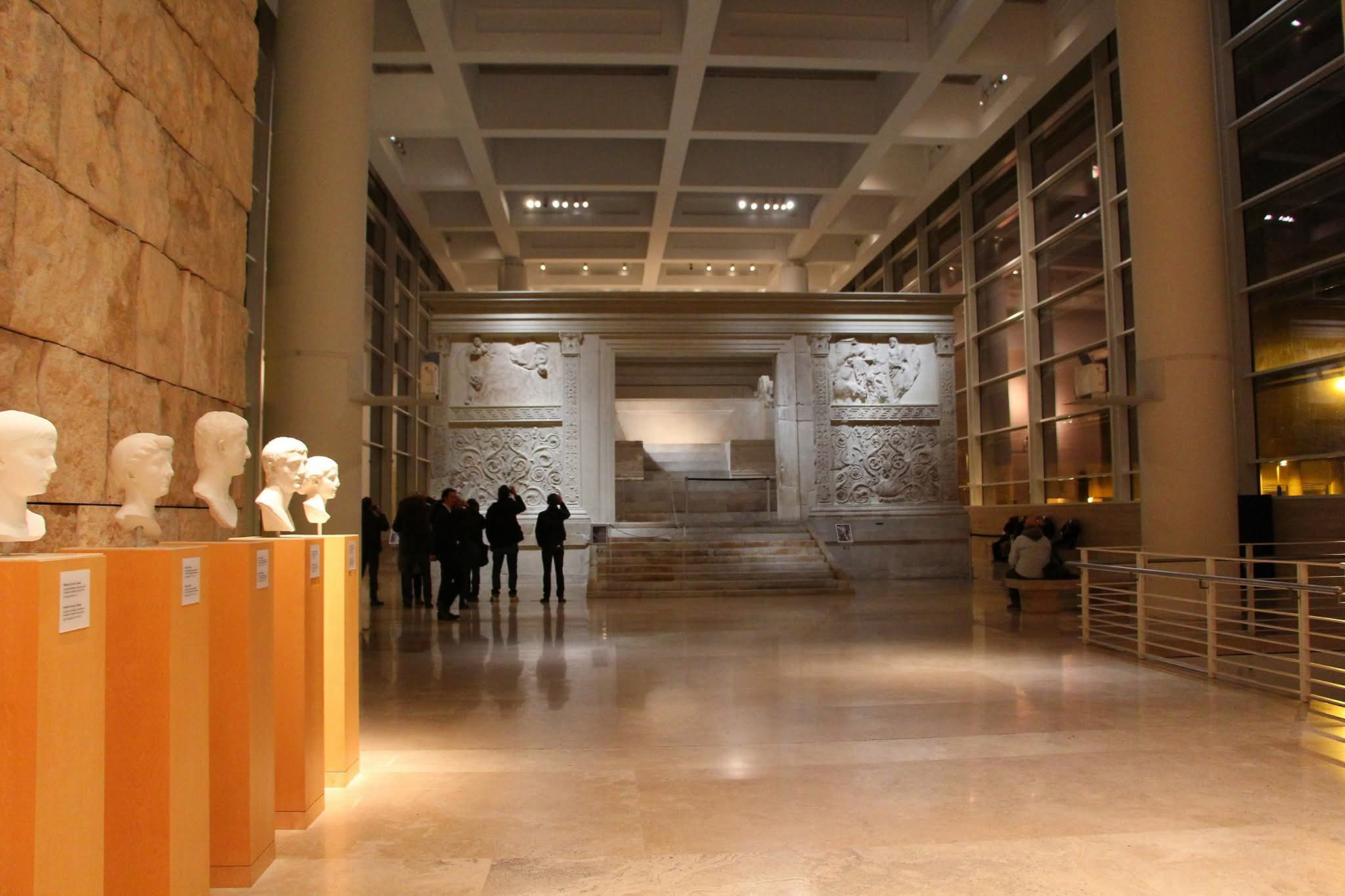
The Ara Pacis belongs to a much larger monumental landscape created around the political and dynastic vision of Augustus.
The Ara Pacis: The Altar of Peace
The Ara Pacis, or Altar of Peace, was commissioned by the Roman Senate in 13 BC to celebrate Augustus’ return from military campaigns in Spain and Gaul.
Completed in 9 BC, it became one of the most important monuments of the Augustan age.
Unlike monuments celebrating conquest, the Ara Pacis celebrated something even more valuable: peace.
For Augustus, peace was not the absence of war but the result of Roman power and stability.
Explore the monument in detail through Ara Pacis Rome .
The Procession in Stone
The exterior reliefs of the Ara Pacis depict members of the imperial family, priests, senators and attendants participating in a ceremonial procession.
These sculptures provide some of the most realistic portraits surviving from Ancient Rome.
They also reveal Augustus’ intention to present his dynasty as the future of the Roman state.
For many historians, the monument represents one of the greatest masterpieces of Roman sculpture.
The Mausoleum of Augustus
A short distance from the Ara Pacis stood the enormous Mausoleum of Augustus.
Built decades before his death, it became the dynastic tomb of the Julio-Claudian family.
Its circular form dominated the northern Campus Martius and served as a permanent reminder of imperial authority.
The Ara Pacis and the Mausoleum formed part of a carefully coordinated symbolic landscape.
Continue with our Mausoleum of Augustus guide.
The Giant Sundial of Augustus
One of the least-known monuments of the Campus Martius was the Horologium Augusti.
This gigantic solar instrument used an Egyptian obelisk as its gnomon, or shadow-casting element.
The obelisk had been transported from Heliopolis in Egypt after Augustus’ victory over Cleopatra and Mark Antony.
Its shadow moved across the Campus Martius, transforming the landscape into an enormous astronomical instrument.
Explore it further in Horologium Augusti .
The Connection Between the Ara Pacis and the Sun
Scholars have long explored possible symbolic relationships between the obelisk, solar movement and the Ara Pacis.
Not every proposed alignment is universally accepted, but the wider connection between architecture, astronomy and imperial symbolism is central to understanding the district.
The movement of the sun across the Campus Martius reinforced the idea of political order expressed through the monumental landscape.
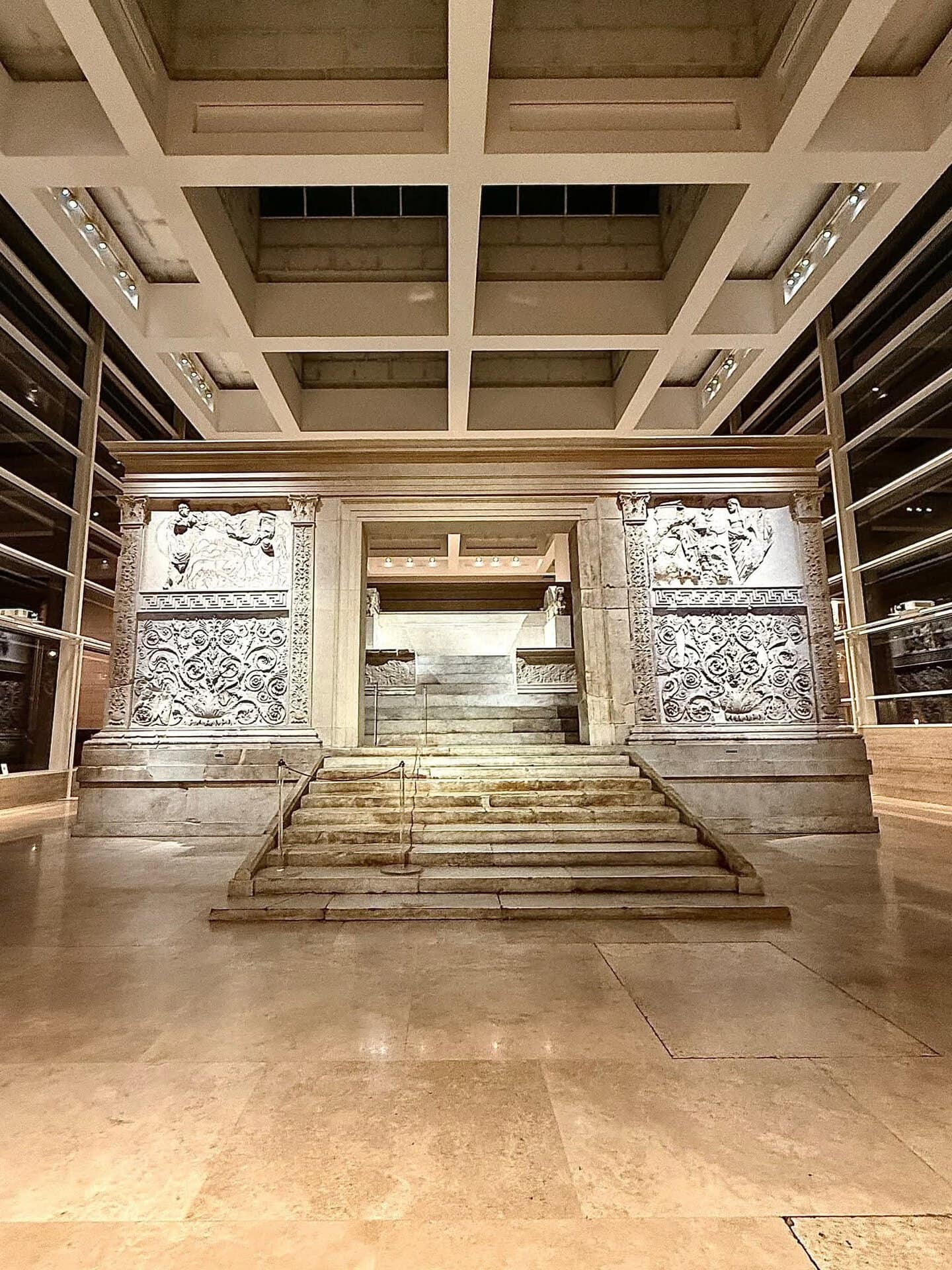
The sculptural programme of the Ara Pacis transformed political ideology into one of the great visual narratives of Augustan Rome.
Egypt Comes to Rome
The Campus Martius reveals how Augustus incorporated Egyptian symbolism into Rome following his victory at Actium.
The obelisk used in the Horologium was an authentic monument from ancient Egypt.
This connection between Rome and Egypt became one of the most visible consequences of the new imperial order.
Discover the wider story in Egyptian Obelisks Rome .
The Pantheon and the Campus Martius
The Pantheon also formed part of the Campus Martius.
The first Pantheon was commissioned by Marcus Agrippa, Augustus’ closest friend and military commander.
The monument occupied a strategic position within Augustus’ broader urban vision.
Although rebuilt by Hadrian in the second century, the Pantheon remained connected to the same sacred and political landscape.
Continue with Pantheon Rome and Marcus Agrippa .
A Cosmic Landscape
Modern archaeology increasingly interprets Augustus’ monuments as parts of a larger symbolic programme.
The Mausoleum represented death and dynastic continuity.
The Ara Pacis represented peace and prosperity.
The solar monument expressed celestial order.
Together, they created a monumental narrative explaining Rome’s destiny under Augustus.
The Floods of the Tiber
The Campus Martius was originally prone to flooding because of its proximity to the Tiber River.
Roman engineers gradually transformed the landscape through construction and drainage works.
The district evolved from an open plain into one of the most monumental urban areas of the empire.
The Campus Martius Today
Although modern Rome has completely transformed the ancient landscape, many traces remain visible.
- The Pantheon
- The Ara Pacis
- The Mausoleum of Augustus
- Ancient Egyptian obelisks
- Piazza Navona, built above Domitian’s Stadium
- Archaeological remains hidden beneath modern streets
Together, these monuments preserve the memory of one of the most ambitious urban projects ever undertaken.
Private Augustus Rome Tours
Private guided tours reveal the hidden connections between the Ara Pacis, the Pantheon, Augustus’ Mausoleum and the ancient Campus Martius.
These experiences are particularly suited to:
- Ancient Rome enthusiasts
- History lovers
- Architecture enthusiasts
- Archaeoastronomy enthusiasts
- Private travellers
- Executive guests
The itinerary can also form part of wider Private Experiences focused on Ancient and Imperial Rome.
The monuments make more sense when you see the landscape behind them.
- The political heart of Augustan Rome
- The Ara Pacis
- The Mausoleum of Augustus
- The giant solar monument
- Ancient Egyptian obelisks
- The Pantheon
- A unique combination of architecture and astronomy
- Private guided tours available
See the monuments as parts of one Roman landscape.
A private itinerary can connect the Ara Pacis, Mausoleum, Pantheon, ancient obelisks and other surviving traces of the Campus Martius into one coherent historical narrative.
Explore Private Experiences →The monuments were never meant to be understood in isolation.
At Rome Private Experience, we reveal the hidden connections between Rome’s most famous monuments.
The Campus Martius was not simply a collection of separate buildings, but a monumental landscape shaped by politics, religion, dynastic identity and the visual language of Imperial Rome.
Understanding this district means understanding the birth of Imperial Rome itself.
Request a Proposal