
San Lorenzo in Miranda, Rome
Thousands of visitors cross the Roman Forum every day. Most pass within metres of one of its most unusual historic interiors without ever entering.
San Lorenzo in Miranda occupies the ancient Temple of Antoninus and Faustina, one of the best-preserved monuments in the Forum.
Roman temple, Christian church and historic professional institution coexist within the same structure.
Few places demonstrate Rome’s extraordinary ability to reuse, reinterpret and preserve its own past so clearly.
The Temple of Antoninus and Faustina
The temple was constructed in the second century AD and dedicated by Emperor Antoninus Pius to his wife Faustina after her death.
Following the emperor’s own death, the sanctuary became associated with both deified members of the imperial couple.
Its monumental columns, marble decoration and elevated position along the Via Sacra made it one of the most prominent structures in the Roman Forum.
Much of that ancient architecture survives precisely because the building later acquired a completely different function.
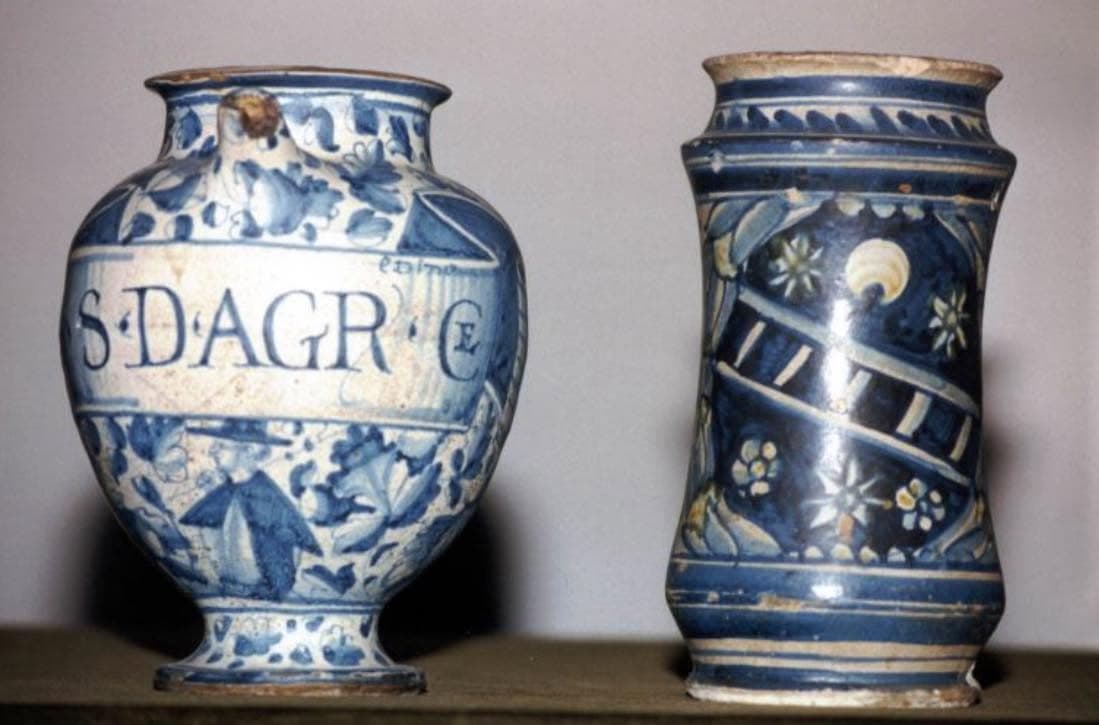
The Christian church did not replace the Roman temple. It grew inside it.
A Church Inside a Pagan Temple
During the medieval period, a Christian church was established inside the ancient temple’s cella.
Rather than demolishing the Roman structure, builders adapted it.
The ancient walls, monumental columns and architectural framework became part of a new Christian building.
The result is one of Rome’s clearest examples of architectural continuity: a sacred space whose function changed radically while much of its physical structure remained.
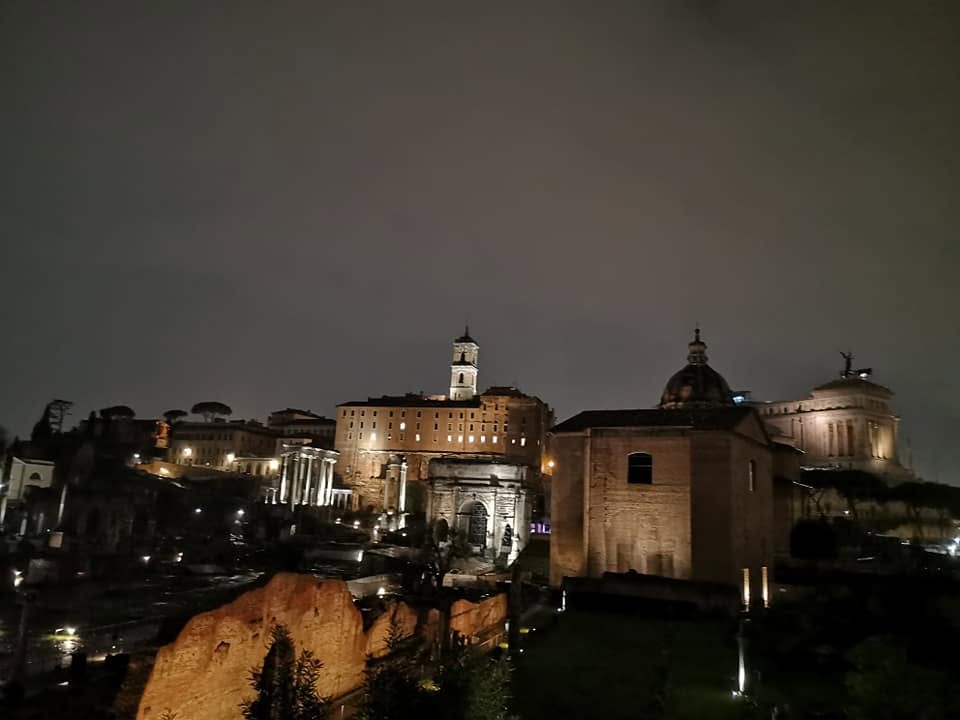
The Hidden Church
San Lorenzo in Miranda is unusual because it is hidden in plain sight.
Its façade forms part of one of the most visible monuments in the Forum, yet the interior remains far less familiar than the temple surrounding it.
Inside, the scale changes completely. The monumental archaeological landscape outside gives way to a quieter and more intimate historic space.
That contrast is part of what makes the site so memorable.
The Grooves in the Ancient Columns
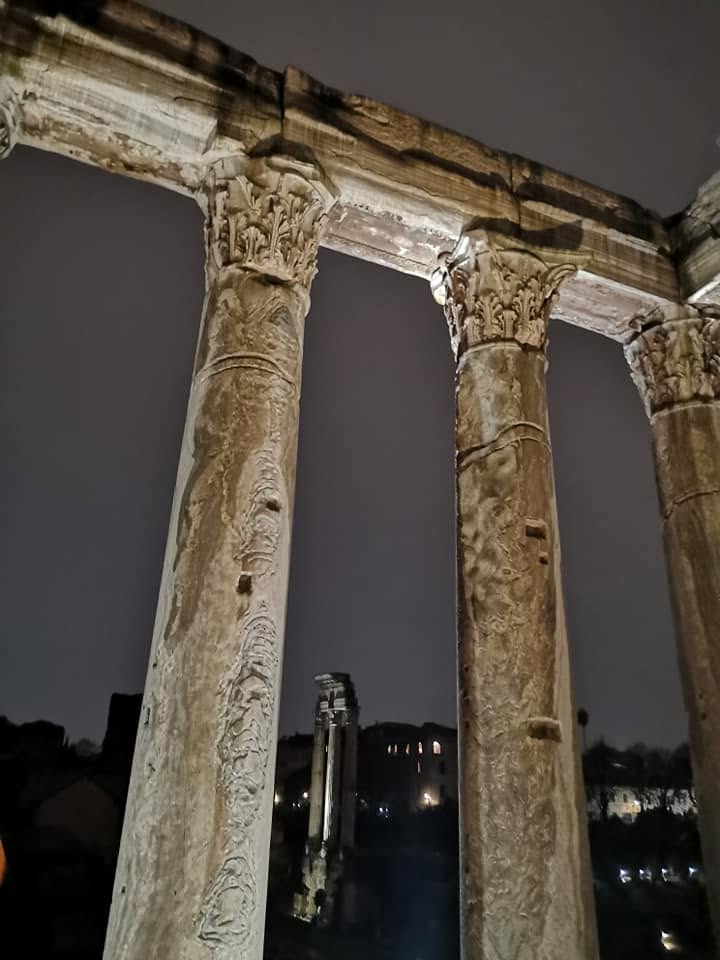
The columns of the Temple of Antoninus and Faustina preserve one of the most curious traces of the monument’s later history.
Deep marks cut into the marble have traditionally been associated with attempts to remove or dismantle the columns during the medieval period.
The columns survived.
Today those scars have themselves become historical evidence, recording not simply the Roman construction of the temple, but the centuries of reuse and transformation that followed.
It Builds on What Was Already There
In many cities, one historical period replaces another.
In Rome, ancient buildings often become foundations, walls, churches or institutional spaces for the generations that follow.
San Lorenzo in Miranda makes that continuity visible within a single monument.
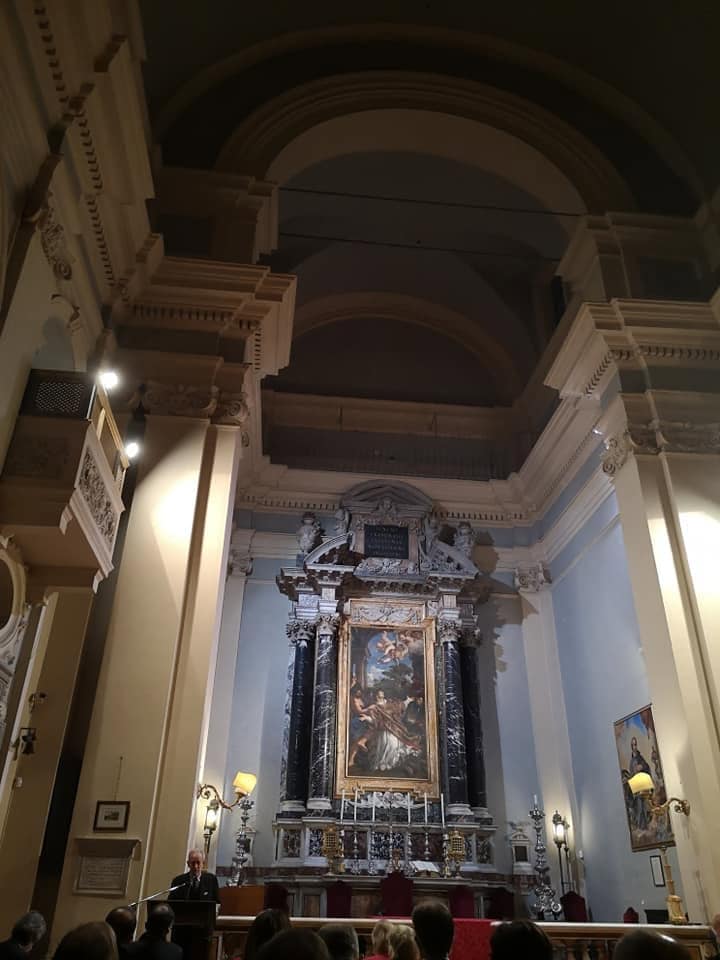
The Historic Pharmaceutical Tradition
San Lorenzo in Miranda is connected with the Nobile Collegio Chimico Farmaceutico Romano, one of Rome’s historic professional institutions.
This adds an unexpected layer to the site.
The building is not only a former Roman temple and Christian church, but also a place associated with the professional history of pharmacy and medicine in Rome.
It offers a rare opportunity to move beyond emperors, popes and artists and explore the institutions and professions that shaped everyday Roman life.
Pharmacy, Science and Professional Life
Rome’s history is usually told through politics, religion and monumental art.
San Lorenzo in Miranda opens another perspective.
Professional corporations, medical knowledge and the preparation of medicines were also part of the city’s social fabric.
The connection between these activities and a historic church within the Roman Forum is precisely the kind of unexpected continuity that makes the site so distinctive.
A monument known to millions from the outside can still preserve an interior experienced by relatively few.
Seeing Ancient Rome from the Inside
Most visits to the Roman Forum are experienced outdoors.
Visitors move between columns, arches, temples and archaeological remains, viewing the monuments as parts of an immense ancient landscape.
San Lorenzo in Miranda offers a completely different perspective.
Standing within a Roman temple that continued to function as a Christian and institutional space turns the Forum from an archaeological site into a place of continuous human occupation.
Private Visits & Special Arrangements
San Lorenzo in Miranda is not a conventional tourist attraction with unrestricted daily access.
Visits depend on institutional schedules, current opening conditions, venue regulations and the type of programme requested.
When access can be arranged, the site may form part of a private cultural itinerary focused on the Roman Forum, hidden heritage, archaeology or the professional history of Rome.
Availability is always confirmed individually before the experience is proposed as part of a final itinerary.
Two Thousand Years Within One Building
Antoninus & Faustina
One of the best-preserved Roman temples in the heart of the Forum.
A Church Inside a Temple
Ancient architecture reused rather than erased.
Behind the Columns
An interior overlooked by most visitors moving along the Via Sacra.
The Pharmaceutical College
An unexpected connection with Rome’s medical and pharmaceutical heritage.
Layers of Reuse
Roman, medieval and later interventions visible in the same structure.
Special Access
Visits possible according to institutional schedules and current availability.
Ancient Rome Did Not Disappear. It Was Reused.
San Lorenzo in Miranda brings together an Imperial temple, a Christian church and centuries of professional history within one extraordinary monument.
It is precisely the kind of place that reveals Rome beyond the standard archaeological itinerary.
Tell us what interests you. We can design the experience around the history you want to explore.
Request a Proposal