
Passetto di Borgo Private Tour
Follow the fortified route that carried Pope Clement VII from the Vatican to Castel Sant'Angelo during the Sack of Rome in 1527.
Request This ExperienceThis is not simply a walk along an old wall.
The Passetto di Borgo was built as a protected connection between the Vatican and Castel Sant'Angelo, giving the pope an emergency route when the streets of Rome were no longer safe.
A private experience places the corridor within the larger story of papal power, Renaissance politics, the Swiss Guard and the Sack of Rome.
Walk the Route That Once Saved a Pope
The experience follows the story of the Passetto from the Vatican side towards the fortress of Castel Sant'Angelo.
Rather than treating the corridor as an isolated monument, your guide reconstructs the political and military world in which it was created.
The Sack of Rome
Understand why Rome collapsed into violence and why Clement VII needed an escape route.
The Swiss Guard
Discover the stand that helped give the pope enough time to reach safety.
Castel Sant'Angelo
Follow the story to the fortress that became the final refuge of papal authority.
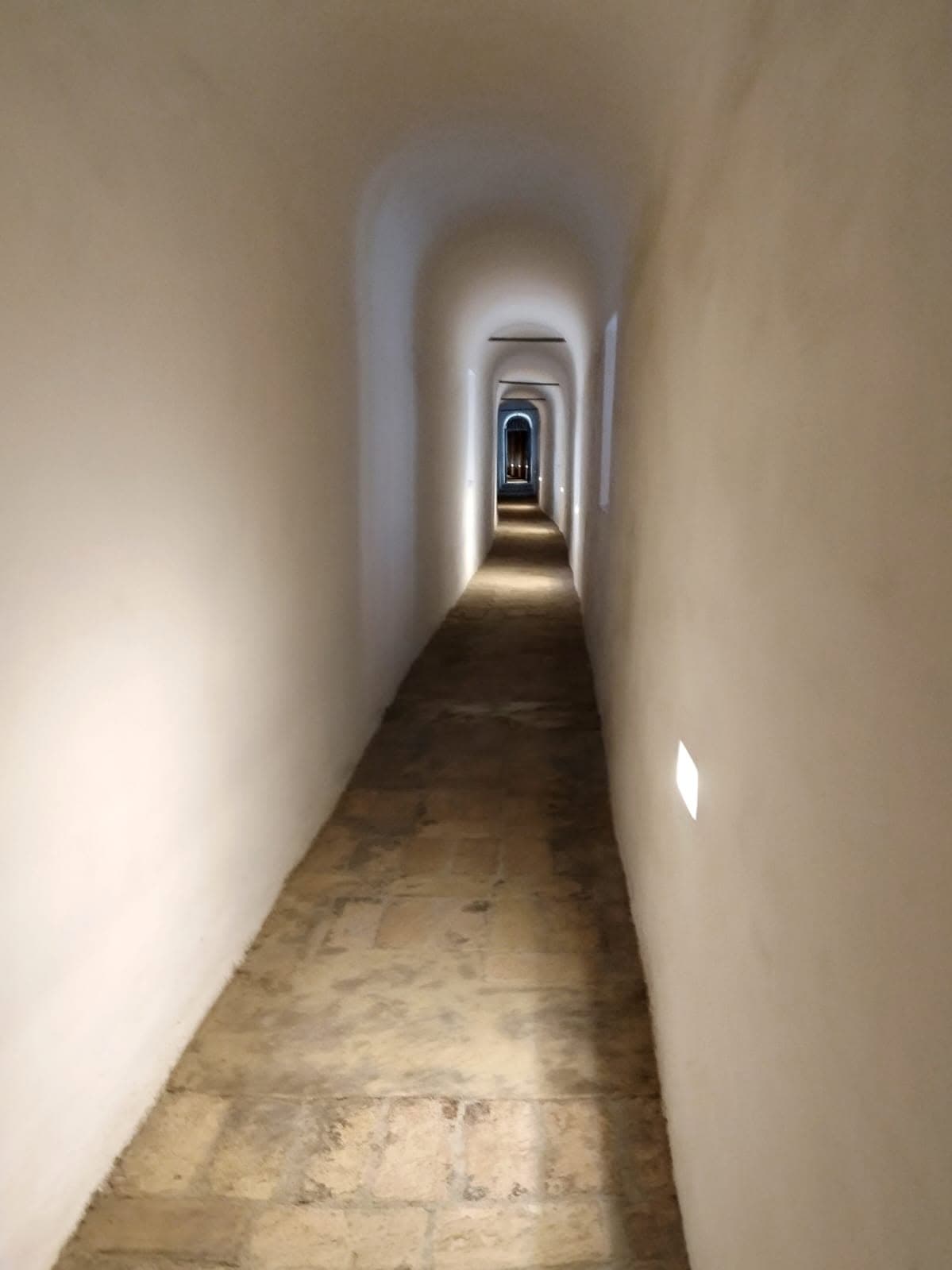
The fortified Passetto crossing the Borgo district between the Vatican and Castel Sant'Angelo.
Rome Fell. Clement VII Had Minutes to Escape.
Imperial troops entered Rome and advanced toward the Vatican during one of the most violent episodes of the Renaissance.
Members of the Swiss Guard defended the pope while Clement VII entered the protected passage leading toward Castel Sant'Angelo.
The architecture did exactly what it had been designed to do: remove the pope from the streets and deliver him to the strongest refuge nearby.
The Story Continues Inside Castel Sant'Angelo
The Passetto makes little sense without understanding its destination.
Castel Sant'Angelo began as Emperor Hadrian's mausoleum before becoming a fortress, prison, papal residence and defensive refuge.
For guests who want the complete story, the experience can be combined with our Castel Sant'Angelo Private Tour .
The Passetto Is Open — But Access Is Controlled
The Passetto di Borgo is now accessible through official guided visits connected with Castel Sant'Angelo.
Visits operate according to the institutional calendar and require the appropriate official admission. Availability is therefore not the same as an unrestricted monument that can be entered at any time.
We first verify the official access calendar for your travel date.
We then design the private historical itinerary around the available entry slot and, if requested, combine it with Castel Sant'Angelo, Borgo or the Vatican area.
Access Alone Is Not the Experience.
The Passetto is physically simple: a long fortified corridor above the streets.
What transforms it is context.
Understanding Clement VII, Charles V, the Swiss Guard, the politics of Renaissance Italy and the defensive role of Castel Sant'Angelo turns the passage into a historical narrative.
The private format allows that story to be adapted to the interests of your group rather than reduced to a standard overview.
Want the Full History of the Passetto?
Our historical pillar explores the origins of the corridor, the Leonine defences, the Sack of Rome and the changing relationship between the Vatican and Castel Sant'Angelo.
Read Passetto di Borgo: The Secret Escape Route of the Popes .
An Experience for Travellers Who Already Know the Famous Rome
The Passetto is particularly rewarding for repeat visitors, Renaissance history enthusiasts, travellers interested in Vatican history and guests looking for something beyond the standard monument circuit.
It can also work especially well as part of a longer tailored programme focused on papal power, hidden Rome or the transformation of Castel Sant'Angelo from imperial tomb to papal fortress.
Follow Clement VII's Escape Route Through Renaissance Rome.
Tell us your travel dates and interests. We will verify official access and design the Passetto experience around your private itinerary.
Request a Proposal